Occasional invaders
House Centipedes: identification, signs & control
Are house centipedes harmful?
House centipedes are mostly harmless to people. They rarely bite, and a bite feels like a mild bee sting. But they eat other insects, so seeing a lot of them usually means there's plenty of food: silverfish, spiders, roaches or ants. Rehoboth treats the moisture-prone areas where centipedes and their prey live, and helps you dry those spaces out.
How do you identify house centipedes?
- Yellowish-gray with three dark stripes down the body
- 15 pairs of very long legs
- Very fast; often seen darting across bathroom and basement floors
What are the signs of house centipedes?
- Sightings in basements, bathrooms and laundry rooms
- Activity at night or when lights come on
Are house centipedes dangerous?
- Rare, mild bites
- A sign of moisture problems and other insects
How can you prevent house centipedes?
- Run a dehumidifier in the basement
- Fix leaks and improve bathroom ventilation
- Clear cardboard and clutter from basement floors
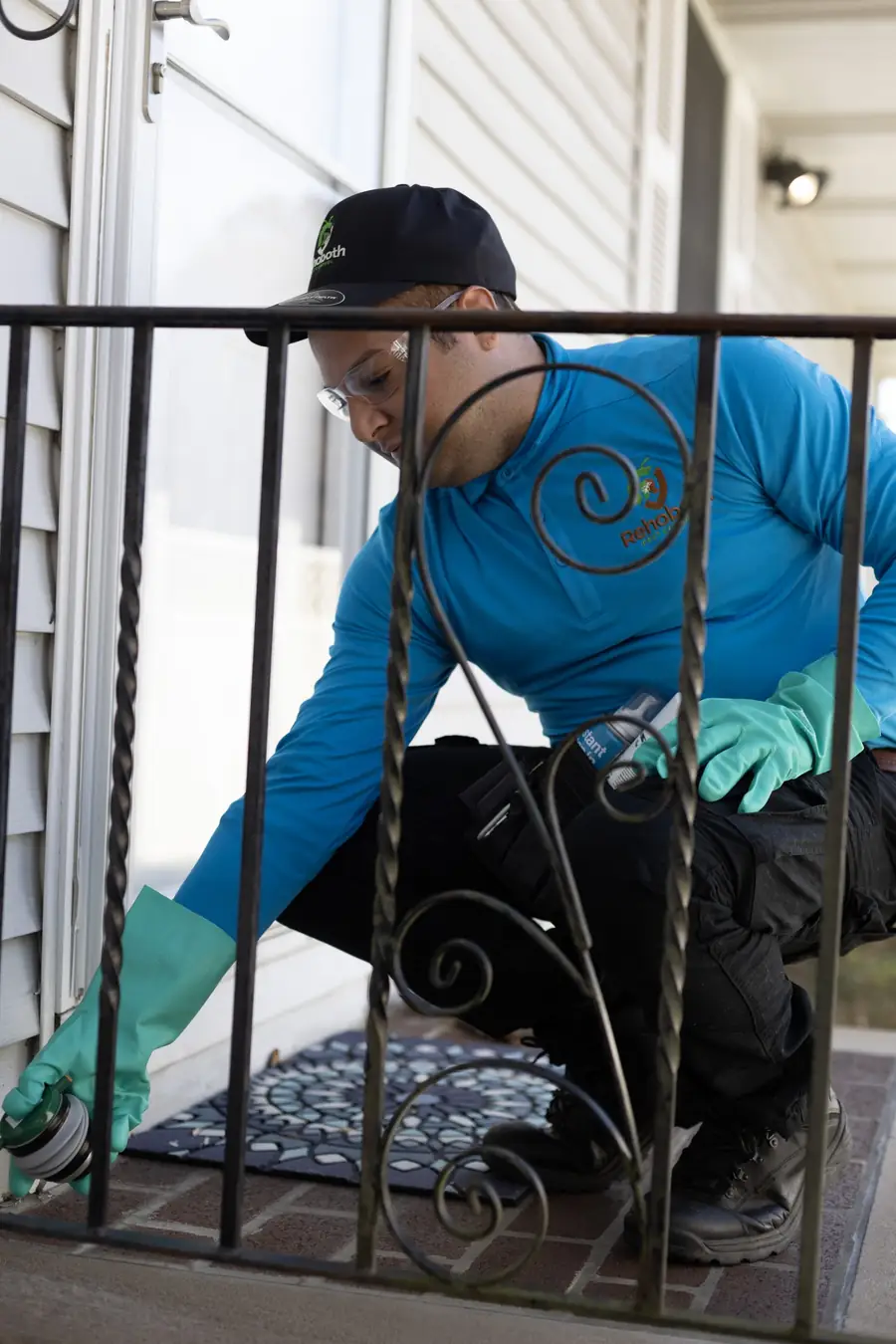
How does Rehoboth treat house centipedes?
Interior spot treatment at moisture points plus exterior crack-and-crevice and perimeter treatment, as part of the general pest plan.
More questions
Should I leave centipedes alone because they eat other bugs?
That's your call, but a big centipede population points to a bigger insect population. Treating the food source and moisture reduces both.
Get rid of house centipedes
Tell us what you're seeing. We'll inspect, explain what we find and recommend the lightest plan that will actually work.