Service
Mole & Vole Control
How do you get rid of moles and voles in your yard?
Moles and voles need different approaches. Moles tunnel for grubs and earthworms, so Rehoboth applies a mole barrier treatment that drives them out of the lawn. Voles eat roots, bulbs and bark, so we control them with tamper-resistant bait stations placed along their runways. A free consultation and our inspection tell us which one you have.
Raised ridges across the lawn and volcano-shaped mounds usually mean moles. Narrow surface runways through the grass, chewed bulbs and gnawed shrub bases usually mean voles. We identify which you have before we treat, because the fix is different.
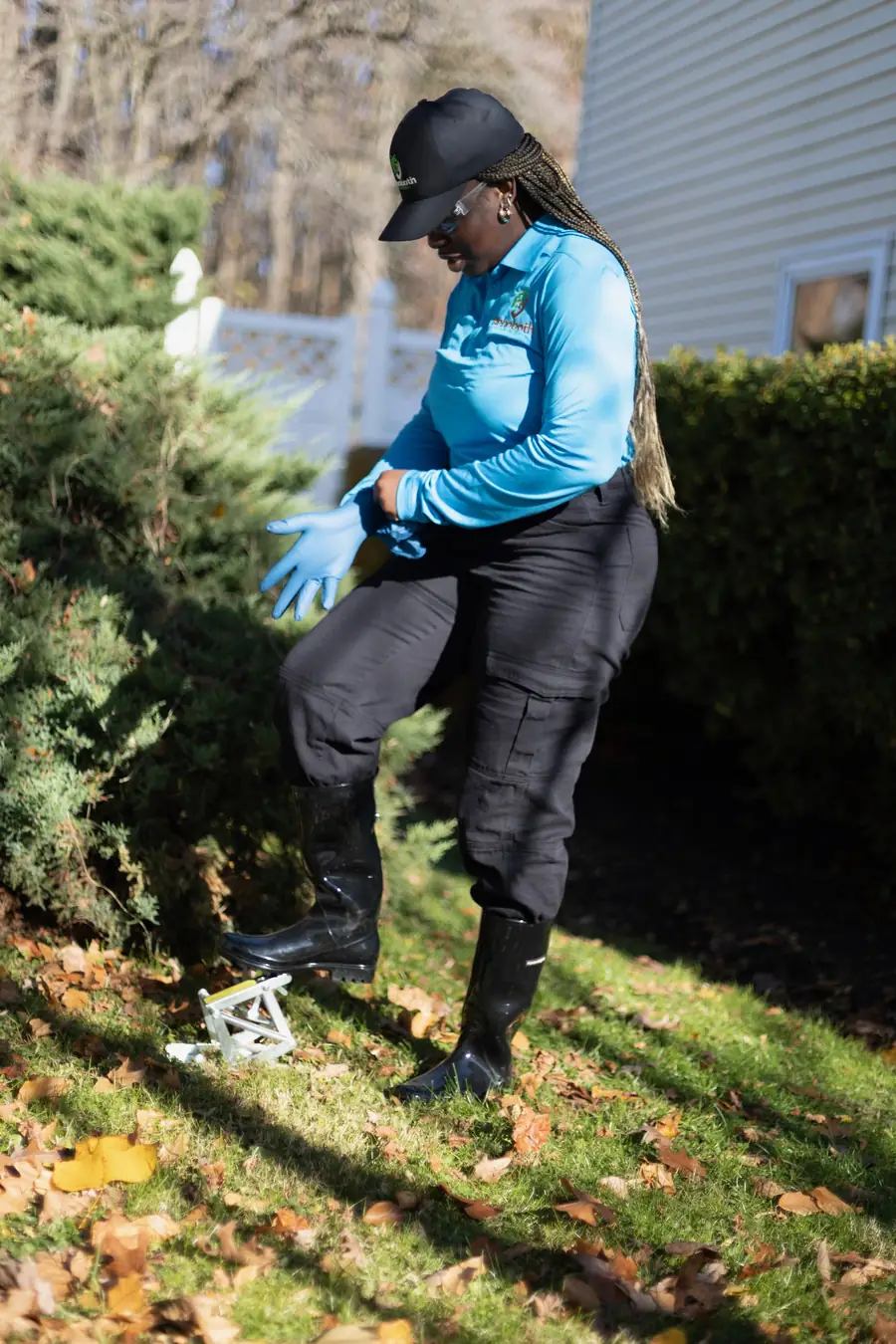
How does mole & vole control work?
Identify
We read the damage: ridges and mounds (moles) versus runways, small holes and chewed roots (voles).
Mole barrier
A quick, intensive barrier treatment that makes the lawn inhospitable so moles move on.
Vole baiting
Tamper-resistant bait stations set along active runways and near damaged beds.
Re-check
We confirm activity has stopped and refresh treatment if needed.
What's included?
- Free yard consultation
- Mole barrier treatment
- Vole bait stations
- Follow-up check
Are moles and voles the same thing?
No. Moles are insect-eaters with large digging claws that rarely surface. Voles are small rodents, like a short-tailed mouse, that eat plants. Voles often use mole tunnels, which is why the two get confused.
When is the best time to treat?
As soon as you see fresh activity. Moles are most active in spring and fall when the soil is moist. Vole damage often shows up as the snow melts, when you find runways and girdled shrubs.
Common questions
Will mole treatment hurt my lawn?
No. The barrier treatment is applied to the lawn as labeled and doesn't damage turf. Your grass recovers once the tunneling stops.
Which pests does this cover?
Ready for mole & vole control?
Tell us what you're seeing. We'll inspect, explain what we find and recommend the lightest plan that will actually work.