
Rodents
Mice: identification, signs & control
How do mice get into a house?
Mice get into a house through gaps as small as a dime: around utility lines and pipes, under garage doors, through foundation vents, at the sill plate and along the roofline. They move in most in fall. Rehoboth finds and seals these entry points while trapping and baiting the mice already inside, which is what stops new ones.
How do you identify mice?
- House mouse: gray-brown, small ears, tail about as long as the body
- Deer mouse: brown above, white belly and feet, more common near fields and woods
- Droppings about 1/4 inch, pointed at the ends
What are the signs of mice?
- Droppings in cabinets, drawers and along walls
- Scratching in walls or ceilings at night
- Chewed food packaging
- Greasy rub marks along baseboards and pipes
Are mice dangerous?
- Contaminate food and surfaces (Salmonella and other bacteria)
- Deer mice can carry hantavirus; never sweep or vacuum their droppings dry
- Chew wiring, insulation and stored items
How can you prevent mice?
- Seal gaps around pipes and wires with copper mesh and sealant
- Install tight door sweeps, especially garage doors
- Store food, birdseed and pet food in sealed containers
- Keep firewood and clutter away from the house
How does Rehoboth treat mice?
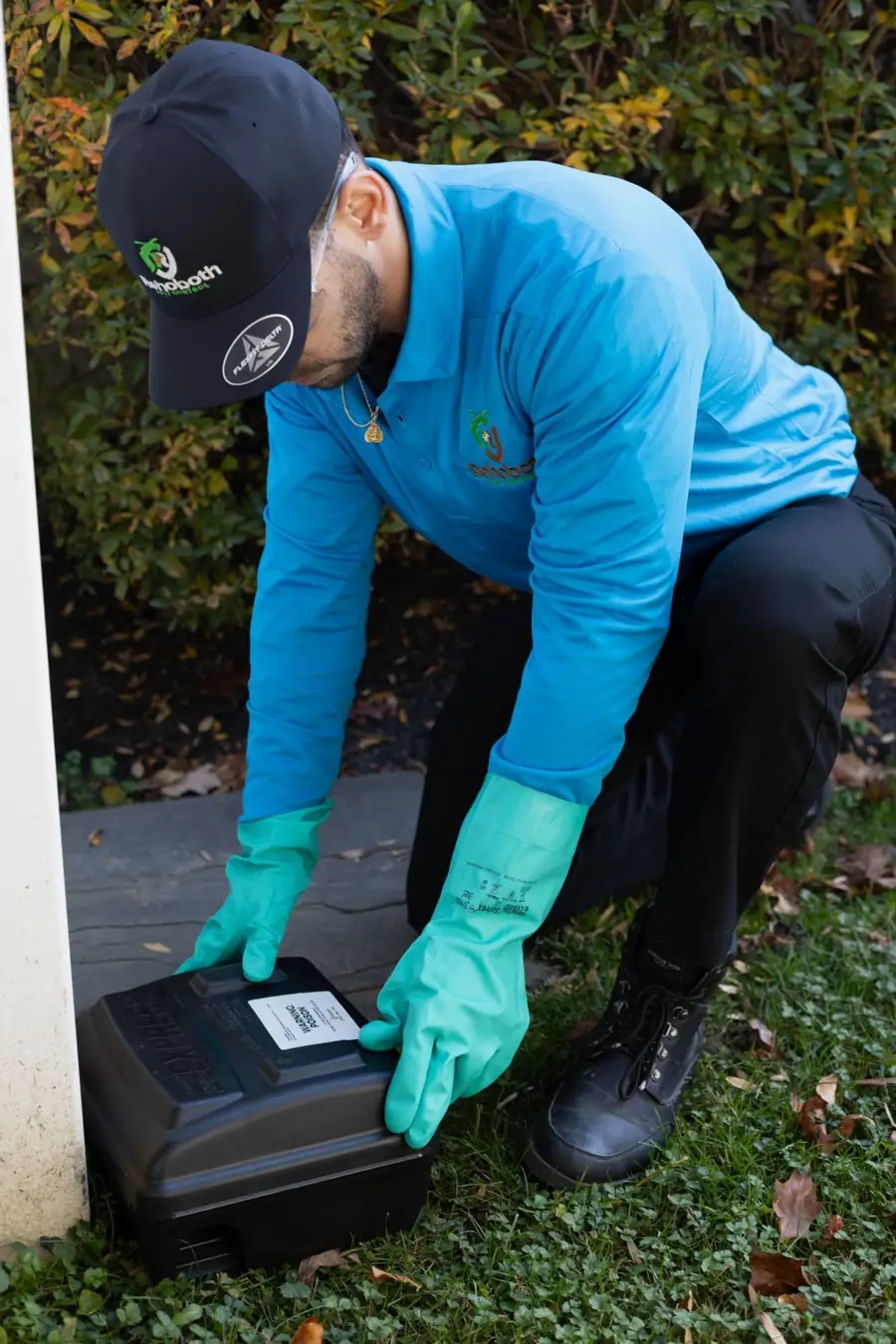
Our rodent program traps inside, places tamper-resistant bait stations outside and seals the entry points we find. It starts with a 3-week intensive treatment ($450), followed by a year-long plan.
More questions
If I see one mouse, are there more?
Usually. Mice breed quickly and are mostly active at night, so one sighting often means a few more out of sight. An inspection tells you how big the problem is.
Get rid of mice
Tell us what you're seeing. We'll inspect, explain what we find and recommend the lightest plan that will actually work.